The #1 Reason Most Productivity Tools Fail
Jan 10, 2026
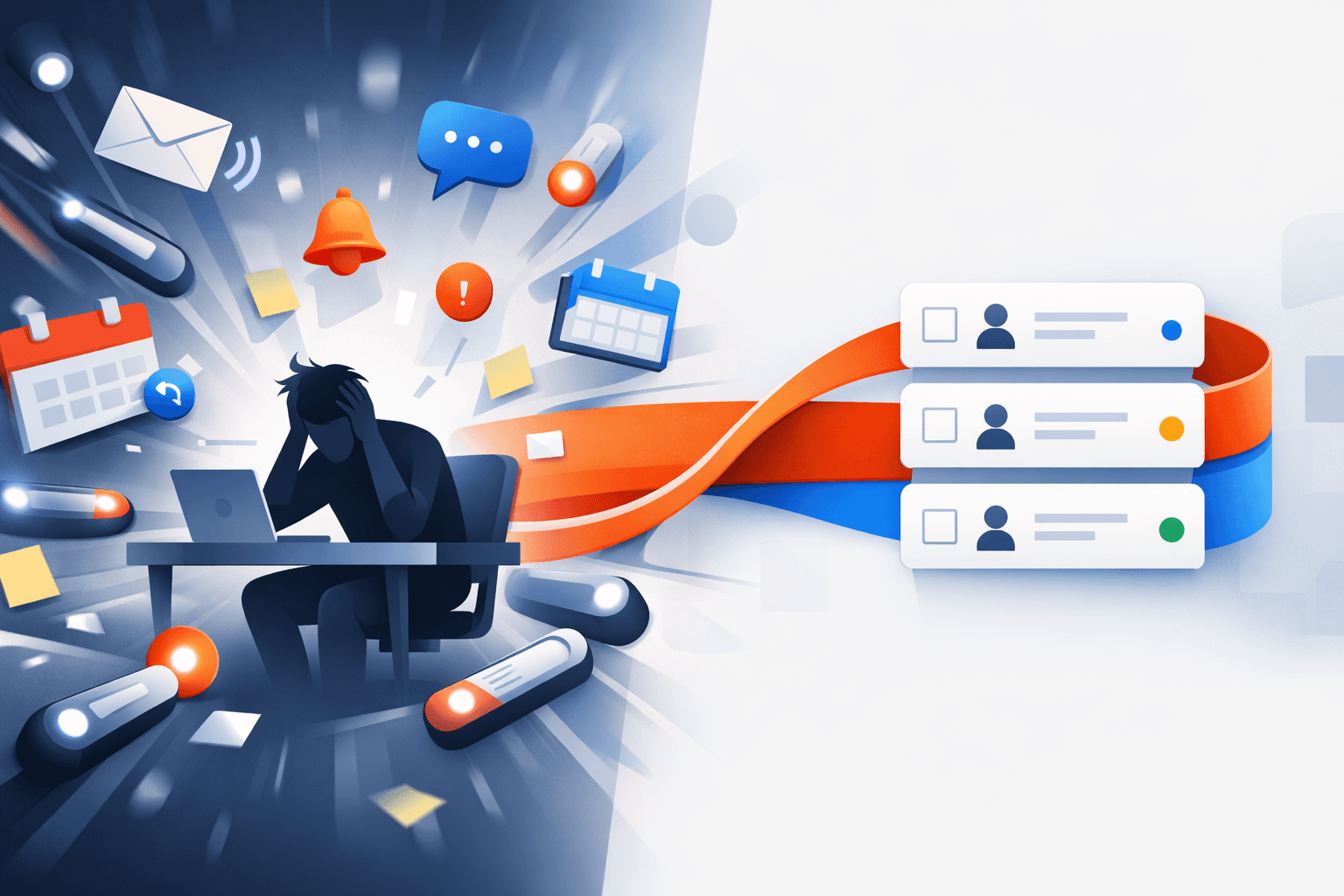
How are you supposed to “get organized”… when staying organized requires more organizing?
That’s the dirty little secret behind most productivity tools.
They fail because they ask humans to do extra work to keep the tool alive.
And humans don’t do extra work for long. Not when their day is already on fire.
Microsoft’s latest Work Trend Index data says the average worker is getting 117 emails a day and gets interrupted roughly every 2 minutes by meetings, emails, or notifications.
That’s not a workflow. That’s a pinball machine.
So what do most productivity tools do?
They show up and say:
“Cool. Now copy-paste your life into me.”
The real reason they fail: they live in the wrong place
Work doesn’t start in your task app.
Work starts in:
an email that says “can you just…”
a meeting where someone casually drops a deadline
a doc review with five stakeholders and zero owners
a Slack message that gets buried in 12 seconds
And then the tool expects you to:
remember it
translate it into tasks
assign owners
add dates
keep it updated
repeat… forever
That’s why adoption dies.
Because the moment things get busy, the tool becomes one more thing to maintain.
Tool sprawl makes it worse (yes, it’s real)
Atlassian cites its State of Teams research: 56% of knowledge workers say their company plans and tracks work across different tools, and 55% say they spend extra time tracking down information even in well-connected companies.
So you’re not “unorganized.”
You’re organized across 9 places. Which is the same thing as not organized.
And we’ve been hammering the same point for years now: a huge chunk of the day gets eaten by “work about work” (coordination, chasing, updating, status).
That’s the trap:
tools promise clarity → but require constant feeding → so people stop feeding them → and clarity dies.
What actually works (and why it sticks)
The only systems that survive real life do one thing:
They capture work where work actually happens.
Not after. Not “when you get a minute.” Not “end of day.”
Right there:
inside the email
inside the thread
inside the meeting recap
If a tool can’t turn messy communication into clean, owned, dated work automatically…
it’s not a productivity tool.
It’s a hobby.
Where Belt fits
Belt doesn’t ask you to rebuild your week in a new app.
It pulls the work out of the places it hides:
turns real requests into tasks
catches soft deadlines before they vanish
keeps your calendar aligned with what you’ve actually committed to
So the tool doesn’t become “another thing to update.
It becomes the thing that makes it impossible to miss.
Next Article
The Hidden Workload Problem in Consulting Firms